

myfroggystuff
myfroggystuff's Activity (394)

zarkinpants added a book review.
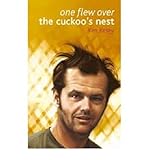 One Flew Over the Cuckoo’s Nest is a famous Oscar-winning movie, but the book on which it was based is a very different work.
The story is centered around the lasting power of one person’s actions on people around him, after his arrival at a psychiatric ward. This new patient is Radle McMurphy, a redheaded troublemaker who starts fights to get away from the work farm. He is markedly different from everyone else who has walked through the double doors. Chief Bromden is half-Indian and exceedingly large and strong. Rather than inspiring fear and respect, he is pretty much ignored by everyone around him because of the assumption that he is deaf and dumb—making him the perfect narrator. His narration (not dumb but articulate) is unique because the symbolism doesn’t stay confined to some incorporeal place that is hidden by the author; it makes its way into the real world as concrete hallucinations. This means his reasoning is sometimes twisted, also that the comparisons he makes are remarkably apt. This is the genius of the book, the main thing Kesey was angry at the filmmakers for changing. Bromden tells the story of how, over the course of several months, McMurphy tries to overturn the stifling order created by Nurse Ratched—a microcosm of the Combine, which in Bromden’s mind, is the oppressive force that has infected society and taken away individuality and even humanity. Both his actions and her reactions escalate as the book progresses. It is a battle of wills, but also between order and disorder.
As for the actual reading experience, the development of themes and symbols is surprisingly straightforward once you get past the first part. The pacing is close to perfect after Part One. This book lacks traditional chapters; instead it is divided into parts, an approach that honestly makes a lot of sense. This is also not a straightforward hero story, as the costs of rebellion are clearly shown. I think knowing this information adds to the suspense of the book, so I won’t count this as a spoiler.7 months ago
One Flew Over the Cuckoo’s Nest is a famous Oscar-winning movie, but the book on which it was based is a very different work.
The story is centered around the lasting power of one person’s actions on people around him, after his arrival at a psychiatric ward. This new patient is Radle McMurphy, a redheaded troublemaker who starts fights to get away from the work farm. He is markedly different from everyone else who has walked through the double doors. Chief Bromden is half-Indian and exceedingly large and strong. Rather than inspiring fear and respect, he is pretty much ignored by everyone around him because of the assumption that he is deaf and dumb—making him the perfect narrator. His narration (not dumb but articulate) is unique because the symbolism doesn’t stay confined to some incorporeal place that is hidden by the author; it makes its way into the real world as concrete hallucinations. This means his reasoning is sometimes twisted, also that the comparisons he makes are remarkably apt. This is the genius of the book, the main thing Kesey was angry at the filmmakers for changing. Bromden tells the story of how, over the course of several months, McMurphy tries to overturn the stifling order created by Nurse Ratched—a microcosm of the Combine, which in Bromden’s mind, is the oppressive force that has infected society and taken away individuality and even humanity. Both his actions and her reactions escalate as the book progresses. It is a battle of wills, but also between order and disorder.
As for the actual reading experience, the development of themes and symbols is surprisingly straightforward once you get past the first part. The pacing is close to perfect after Part One. This book lacks traditional chapters; instead it is divided into parts, an approach that honestly makes a lot of sense. This is also not a straightforward hero story, as the costs of rebellion are clearly shown. I think knowing this information adds to the suspense of the book, so I won’t count this as a spoiler.7 months agozarkinpants has read this book.
 By Ken Kesey7 months ago
zarkinpants's book review was featured in The Joy Luck Club: A Novel (Penguin Drop Caps).

 I’d heard about this book for a long time, and I wasn’t sure exactly what to expect. For instance, what’s this “club,” a book club or something? Also, more importantly: would this book turn out to follow the same hackneyed patterns of Chinese American literature?
But I started reading, and the book certainly starts with a scintillating opening chapter introducing the eponymous Joy Luck Club. At its core, this is a group of four elderly Chinese women who share stories, laugh, eat, and play mahjong. The group’s founding member has passed away suddenly, leaving her daughter confused and grieving. Asked to fill in for her mother at the mahjong table, she learns more about her already inscrutable mother and is given a difficult task. Instantly, I could see the author setting up a tone of sadness tempered with pangs of bitter, undeniable hope, something that wouldn’t disappear even when the plot started to drag a little. I could see the mature and layered writing. I read on, hooked, as the book described in distinct yet readable prose first the mothers’ difficult upbringings in China before World War II, then the daughters’ childhoods, next the continuation of the mothers’ stories, and finally the lives of both mother and daughter during the main timeframe. The book is divided into these sections, each introduced by a pithy, allegorical story. It cycles through each of the characters before returning.
Gluing the story together is Jing-Mei Woo, whose personal tragedy and journey of self-discovery begin and end the book, but there’s such a huge detour that in the end it leaves the reader with a deep understanding of all the daughters and mothers connected to the Joy Luck Club.
Amy Tan’s debut novel may have lost some relevancy for the newest generation of Chinese American readers, given the fact that she’s now about the same age as the mothers she writes about, but it’s not as bad as it seems. Even though the book is centered on Chinese-American families during the 90s, the themes are universal.
There are seven narrators in this story, each with their own personality and life story. This increases the book’s scope at the expense of being a little overwhelming. Some fuzziness is natural, but the structure is clear enough if you don’t mind flipping backward a little bit.
It’s come to my attention that people have protested about the stereotypical-leaning descriptions of the parents. If Amy Tan gives them these backstories showing that they are not the plump, eccentric people they appear to be, why make them exclaim “Wah!” or speak broken English? It was a bit discouraging reading about the vague Chinese superstitions that pop out of nowhere, inexplicable as the unintuitive romanization system she seems to employ only for Mandarin. If you do decide to read this book, you’ll have to accept this confusing phenomenon, and for me it was by no means a book-ruining flaw.
Also, be warned that any discussion about the father-daughter relationship is basically nonexistent. To a degree that makes sense, because the book is meant to focus on the complex mother-daughter bond. You can’t eat pie and cake in the same meal and not expect to fall into a food coma.
Then there are the slight issues with the plot, specifically the huge focus on the daughters’ marriage troubles: whether the marriage is going to fall apart, why it’s falling apart, if parental approval is going to be acquired. Jing-Mei is the only one free from this. While it’s useful to make a quick case study, and to see what the mothers have to say (which are surprisingly insightful), it didn’t hold my attention for long.
These are some of the main complaints, but there are many more positive traits that I wholeheartedly believe outshine these problems. For any reader much of the appeal, why the book is “deep,” comes from the immense pathos of the struggles of the mothers in China, as well as the universally-relatable difficulties of communication between parent and child. I teared up a bit while reading this book, and I usually have quite a tolerance for that kind of thing. As a bonus, the symbolism is so layered, the characters’ motivations so multifaceted, that you really can have a rewarding discussion about the Joy Luck Club at a book club. You can also ponder its themes on your own, like I did.
Is this book worth reading? Definitely. Does it invite deep thought and reflection? Yes, if you choose to do so. Does it encapsulate the entire experience of being Chinese American? It’s about 70% of the way there. Generally, The Joy Luck Club is well above average—miles above forgettable novels you flip through when you have nothing better to do—and really deserves its spot as a modern classic.7 months ago
I’d heard about this book for a long time, and I wasn’t sure exactly what to expect. For instance, what’s this “club,” a book club or something? Also, more importantly: would this book turn out to follow the same hackneyed patterns of Chinese American literature?
But I started reading, and the book certainly starts with a scintillating opening chapter introducing the eponymous Joy Luck Club. At its core, this is a group of four elderly Chinese women who share stories, laugh, eat, and play mahjong. The group’s founding member has passed away suddenly, leaving her daughter confused and grieving. Asked to fill in for her mother at the mahjong table, she learns more about her already inscrutable mother and is given a difficult task. Instantly, I could see the author setting up a tone of sadness tempered with pangs of bitter, undeniable hope, something that wouldn’t disappear even when the plot started to drag a little. I could see the mature and layered writing. I read on, hooked, as the book described in distinct yet readable prose first the mothers’ difficult upbringings in China before World War II, then the daughters’ childhoods, next the continuation of the mothers’ stories, and finally the lives of both mother and daughter during the main timeframe. The book is divided into these sections, each introduced by a pithy, allegorical story. It cycles through each of the characters before returning.
Gluing the story together is Jing-Mei Woo, whose personal tragedy and journey of self-discovery begin and end the book, but there’s such a huge detour that in the end it leaves the reader with a deep understanding of all the daughters and mothers connected to the Joy Luck Club.
Amy Tan’s debut novel may have lost some relevancy for the newest generation of Chinese American readers, given the fact that she’s now about the same age as the mothers she writes about, but it’s not as bad as it seems. Even though the book is centered on Chinese-American families during the 90s, the themes are universal.
There are seven narrators in this story, each with their own personality and life story. This increases the book’s scope at the expense of being a little overwhelming. Some fuzziness is natural, but the structure is clear enough if you don’t mind flipping backward a little bit.
It’s come to my attention that people have protested about the stereotypical-leaning descriptions of the parents. If Amy Tan gives them these backstories showing that they are not the plump, eccentric people they appear to be, why make them exclaim “Wah!” or speak broken English? It was a bit discouraging reading about the vague Chinese superstitions that pop out of nowhere, inexplicable as the unintuitive romanization system she seems to employ only for Mandarin. If you do decide to read this book, you’ll have to accept this confusing phenomenon, and for me it was by no means a book-ruining flaw.
Also, be warned that any discussion about the father-daughter relationship is basically nonexistent. To a degree that makes sense, because the book is meant to focus on the complex mother-daughter bond. You can’t eat pie and cake in the same meal and not expect to fall into a food coma.
Then there are the slight issues with the plot, specifically the huge focus on the daughters’ marriage troubles: whether the marriage is going to fall apart, why it’s falling apart, if parental approval is going to be acquired. Jing-Mei is the only one free from this. While it’s useful to make a quick case study, and to see what the mothers have to say (which are surprisingly insightful), it didn’t hold my attention for long.
These are some of the main complaints, but there are many more positive traits that I wholeheartedly believe outshine these problems. For any reader much of the appeal, why the book is “deep,” comes from the immense pathos of the struggles of the mothers in China, as well as the universally-relatable difficulties of communication between parent and child. I teared up a bit while reading this book, and I usually have quite a tolerance for that kind of thing. As a bonus, the symbolism is so layered, the characters’ motivations so multifaceted, that you really can have a rewarding discussion about the Joy Luck Club at a book club. You can also ponder its themes on your own, like I did.
Is this book worth reading? Definitely. Does it invite deep thought and reflection? Yes, if you choose to do so. Does it encapsulate the entire experience of being Chinese American? It’s about 70% of the way there. Generally, The Joy Luck Club is well above average—miles above forgettable novels you flip through when you have nothing better to do—and really deserves its spot as a modern classic.7 months agozarkinpants added a book review.
I’d heard about this book for a long time, and I wasn’t sure exactly what to expect. For instance, what’s this “club,” a book club or something? Also, more importantly: would this book turn out to follow the same hackneyed patterns of Chinese American literature?
But I started reading, and the book certainly starts with a scintillating opening chapter introducing the eponymous Joy Luck Club. At its core, this is a group of four elderly Chinese women who share stories, laugh, eat, and play mahjong. The group’s founding member has passed away suddenly, leaving her daughter confused and grieving. Asked to fill in for her mother at the mahjong table, she learns more about her already inscrutable mother and is given a difficult task. Instantly, I could see the author setting up a tone of sadness tempered with pangs of bitter, undeniable hope, something that wouldn’t disappear even when the plot started to drag a little. I could see the mature and layered writing. I read on, hooked, as the book described in distinct yet readable prose first the mothers’ difficult upbringings in China before World War II, then the daughters’ childhoods, next the continuation of the mothers’ stories, and finally the lives of both mother and daughter during the main timeframe. The book is divided into these sections, each introduced by a pithy, allegorical story. It cycles through each of the characters before returning.
Gluing the story together is Jing-Mei Woo, whose personal tragedy and journey of self-discovery begin and end the book, but there’s such a huge detour that in the end it leaves the reader with a deep understanding of all the daughters and mothers connected to the Joy Luck Club.
Amy Tan’s debut novel may have lost some relevancy for the newest generation of Chinese American readers, given the fact that she’s now about the same age as the mothers she writes about, but it’s not as bad as it seems. Even though the book is centered on Chinese-American families during the 90s, the themes are universal.
There are seven narrators in this story, each with their own personality and life story. This increases the book’s scope at the expense of being a little overwhelming. Some fuzziness is natural, but the structure is clear enough if you don’t mind flipping backward a little bit.
It’s come to my attention that people have protested about the stereotypical-leaning descriptions of the parents. If Amy Tan gives them these backstories showing that they are not the plump, eccentric people they appear to be, why make them exclaim “Wah!” or speak broken English? It was a bit discouraging reading about the vague Chinese superstitions that pop out of nowhere, inexplicable as the unintuitive romanization system she seems to employ only for Mandarin. If you do decide to read this book, you’ll have to accept this confusing phenomenon, and for me it was by no means a book-ruining flaw.
Also, be warned that any discussion about the father-daughter relationship is basically nonexistent. To a degree that makes sense, because the book is meant to focus on the complex mother-daughter bond. You can’t eat pie and cake in the same meal and not expect to fall into a food coma.
Then there are the slight issues with the plot, specifically the huge focus on the daughters’ marriage troubles: whether the marriage is going to fall apart, why it’s falling apart, if parental approval is going to be acquired. Jing-Mei is the only one free from this. While it’s useful to make a quick case study, and to see what the mothers have to say (which are surprisingly insightful), it didn’t hold my attention for long.
These are some of the main complaints, but there are many more positive traits that I wholeheartedly believe outshine these problems. For any reader much of the appeal, why the book is “deep,” comes from the immense pathos of the struggles of the mothers in China, as well as the universally-relatable difficulties of communication between parent and child. I teared up a bit while reading this book, and I usually have quite a tolerance for that kind of thing. As a bonus, the symbolism is so layered, the characters’ motivations so multifaceted, that you really can have a rewarding discussion about the Joy Luck Club at a book club. You can also ponder its themes on your own, like I did.
Is this book worth reading? Definitely. Does it invite deep thought and reflection? Yes, if you choose to do so. Does it encapsulate the entire experience of being Chinese American? It’s about 70% of the way there. Generally, The Joy Luck Club is well above average—miles above forgettable novels you flip through when you have nothing better to do—and really deserves its spot as a modern classic.7 months agozarkinpants's book review was featured in The Joy Luck Club: A Novel (Penguin Drop Caps).
I’d heard about this book for a long time, and I wasn’t sure exactly what to expect. For instance, what’s this “club,” a book club or something? Also, more importantly: would this book turn out to follow the same hackneyed patterns of Chinese American literature?
But I started reading, and the book certainly starts with a scintillating opening chapter introducing the eponymous Joy Luck Club. At its core, this is a group of four elderly Chinese women who share stories, laugh, eat, and play mahjong. The group’s founding member has passed away suddenly, leaving her daughter confused and grieving. Asked to fill in for her mother at the mahjong table, she learns more about her already inscrutable mother and is given a difficult task. Instantly, I could see the author setting up a tone of sadness tempered with pangs of bitter, undeniable hope, something that wouldn’t disappear even when the plot started to drag a little. I could see the mature and layered writing. I read on, hooked, as the book described in distinct yet readable prose first the mothers’ difficult upbringings in China before World War II, then the daughters’ childhoods, next the continuation of the mothers’ stories, and finally the lives of both mother and daughter during the main timeframe. The book is divided into these sections, each introduced by a pithy, allegorical story. It cycles through each of the characters before returning.
Gluing the story together is Jing-Mei Woo, whose personal tragedy and journey of self-discovery begin and end the book, but there’s such a huge detour that in the end it leaves the reader with a deep understanding of all the daughters and mothers connected to the Joy Luck Club.
Amy Tan’s debut novel may have lost some relevancy for the newest generation of Chinese American readers, given the fact that she’s now about the same age as the mothers she writes about, but it’s not as bad as it seems. Even though the book is centered on Chinese-American families during the 90s, the themes are universal.
There are seven narrators in this story, each with their own personality and life story. This increases the book’s scope at the expense of being a little overwhelming. Some fuzziness is natural, but the structure is clear enough if you don’t mind flipping backward a little bit.
It’s come to my attention that people have protested about the stereotypical-leaning descriptions of the parents. If Amy Tan gives them these backstories showing that they are not the plump, eccentric people they appear to be, why make them exclaim “Wah!” or speak broken English? It was a bit discouraging reading about the vague Chinese superstitions that pop out of nowhere, inexplicable as the unintuitive romanization system she seems to employ only for Mandarin. If you do decide to read this book, you’ll have to accept this confusing phenomenon, and for me it was by no means a book-ruining flaw.
Also, be warned that any discussion about the father-daughter relationship is basically nonexistent. To a degree that makes sense, because the book is meant to focus on the complex mother-daughter bond. You can’t eat pie and cake in the same meal and not expect to fall into a food coma.
Then there are the slight issues with the plot, specifically the huge focus on the daughters’ marriage troubles: whether the marriage is going to fall apart, why it’s falling apart, if parental approval is going to be acquired. Jing-Mei is the only one free from this. While it’s useful to make a quick case study, and to see what the mothers have to say (which are surprisingly insightful), it didn’t hold my attention for long.
These are some of the main complaints, but there are many more positive traits that I wholeheartedly believe outshine these problems. For any reader much of the appeal, why the book is “deep,” comes from the immense pathos of the struggles of the mothers in China, as well as the universally-relatable difficulties of communication between parent and child. I teared up a bit while reading this book, and I usually have quite a tolerance for that kind of thing. As a bonus, the symbolism is so layered, the characters’ motivations so multifaceted, that you really can have a rewarding discussion about the Joy Luck Club at a book club. You can also ponder its themes on your own, like I did.
Is this book worth reading? Definitely. Does it invite deep thought and reflection? Yes, if you choose to do so. Does it encapsulate the entire experience of being Chinese American? It’s about 70% of the way there. Generally, The Joy Luck Club is well above average—miles above forgettable novels you flip through when you have nothing better to do—and really deserves its spot as a modern classic.7 months agozarkinpants added a book review.
I’d heard about this book for a long time, and I wasn’t sure exactly what to expect. For instance, what’s this “club,” a book club or something? Also, more importantly: would this book turn out to follow the same hackneyed patterns of Chinese American literature?
But I started reading, and the book certainly starts with a scintillating opening chapter introducing the eponymous Joy Luck Club. At its core, this is a group of four elderly Chinese women who share stories, laugh, eat, and play mahjong. The group’s founding member has passed away suddenly, leaving her daughter confused and grieving. Asked to fill in for her mother at the mahjong table, she learns more about her already inscrutable mother and is given a difficult task. Instantly, I could see the author setting up a tone of sadness tempered with pangs of bitter, undeniable hope, something that wouldn’t disappear even when the plot started to drag a little. I could see the mature and layered writing. I read on, hooked, as the book described in distinct yet readable prose first the mothers’ difficult upbringings in China before World War II, then the daughters’ childhoods, next the continuation of the mothers’ stories, and finally the lives of both mother and daughter during the main timeframe. The book is divided into these sections, each introduced by a pithy, allegorical story. It cycles through each of the characters before returning.
Gluing the story together is Jing-Mei Woo, whose personal tragedy and journey of self-discovery begin and end the book, but there’s such a huge detour that in the end it leaves the reader with a deep understanding of all the daughters and mothers connected to the Joy Luck Club.
Amy Tan’s debut novel may have lost some relevancy for the newest generation of Chinese American readers, given the fact that she’s now about the same age as the mothers she writes about, but it’s not as bad as it seems. Even though the book is centered on Chinese-American families during the 90s, the themes are universal.
There are seven narrators in this story, each with their own personality and life story. This increases the book’s scope at the expense of being a little overwhelming. Some fuzziness is natural, but the structure is clear enough if you don’t mind flipping backward a little bit.
It’s come to my attention that people have protested about the stereotypical-leaning descriptions of the parents. If Amy Tan gives them these backstories showing that they are not the plump, eccentric people they appear to be, why make them exclaim “Wah!” or speak broken English? It was a bit discouraging reading about the vague Chinese superstitions that pop out of nowhere, inexplicable as the unintuitive romanization system she seems to employ only for Mandarin. If you do decide to read this book, you’ll have to accept this confusing phenomenon, and for me it was by no means a book-ruining flaw.
Also, be warned that any discussion about the father-daughter relationship is basically nonexistent. To a degree that makes sense, because the book is meant to focus on the complex mother-daughter bond. You can’t eat pie and cake in the same meal and not expect to fall into a food coma.
Then there are the slight issues with the plot, specifically the huge focus on the daughters’ marriage troubles: whether the marriage is going to fall apart, why it’s falling apart, if parental approval is going to be acquired. Jing-Mei is the only one free from this. While it’s useful to make a quick case study, and to see what the mothers have to say (which are surprisingly insightful), it didn’t hold my attention for long.
These are some of the main complaints, but there are many more positive traits that I wholeheartedly believe outshine these problems. For any reader much of the appeal, why the book is “deep,” comes from the immense pathos of the struggles of the mothers in China, as well as the universally-relatable difficulties of communication between parent and child. I teared up a bit while reading this book, and I usually have quite a tolerance for that kind of thing. As a bonus, the symbolism is so layered, the characters’ motivations so multifaceted, that you really can have a rewarding discussion about the Joy Luck Club at a book club. You can also ponder its themes on your own, like I did.
Is this book worth reading? Definitely. Does it invite deep thought and reflection? Yes, if you choose to do so. Does it encapsulate the entire experience of being Chinese American? It’s about 70% of the way there. Generally, The Joy Luck Club is well above average—miles above forgettable novels you flip through when you have nothing better to do—and really deserves its spot as a modern classic.7 months agozarkinpants has read this book.
7 months agozarkinpants has joined a book club.
About 1 year agozarkinpants's book review was featured in Listen, Slowly.
 The experience of discovering one’s roots, as anyone who has done so can attest, is deeply grounding and often offers a change in perspective. Mai, who is known as Mia to her friends, has a name that captures the duality of life as a native of the California sand and sunshine with Vietnamese roots. The events in this book, however, occur in the latter location, where she accompanies her grandmother (Ba, in Vietnamese) to follow the trail of her Ong, or grandfather, who disappeared and was never heard from again during the Vietnamese War. It is the summer before 7th grade, and she is nervous about what is happening at her home, for some reasons that are often attributed to this age (read: crushes). Moreover, she dreads the prospect of spending most of her summer with her grandmother and people from Ong’s former village, to whom she may or may not be related. Alone, since her mother has decided, of course, to stay in California to prosecute an all-important case; her father, meanwhile, has left to practice surgery on children living in rural villages in the distant mountains of Vietnam. A detective has found possible evidence of where Ong went in the form of a former guard of his, when Ong was captured and sent to the North of Vietnam. The detective and his loquacity factor heavily in this story. However, the process of getting the guard to where Ba is, and persuading him to tell all of what he knows, takes forever. During which, Mai is forced to stay in a new and unfamiliar village acclimating to her surroundings. Understandably, this is something she’s none too happy to do.
A moving premise. A fresh narrator. A summer that will be like no other. The themes that resonated with me were finding one’s roots, especially those that are far away, perhaps in another country. Learning about Vietnamese culture? A welcome addition. Seriously, learning about your culture, and your grandfather whom you never knew, only heard about is almost as fresh and engaging of a plot as is possible. Mai’s distinctive voice (teenager in a new, unfamiliar country) mostly helps the story along, but there are instances where it muddles up the story and the experience. All the reduced relative clauses and casual narration may force a few rereadings of those offending lines. What is supposed to be an easy read turns into a moderately-difficult one. The same can sometimes be said about the plot and pacing. While most of the time it emphasizes Mai’s new experiences and her becoming ever closer to her heritage and the people who are a part of, and near it, some of these just demonstrate her snarky attitude, acting as filler for the plot. Without trodding into spoiler territory, I can say that some of the things she brings over, while slightly funny, do nothing to move the plot forward (perhaps because the author felt the book would be too short to be meaningful?) This isn’t true, as Ba’s poetic stories—about meeting Ong, naming her children, learning about his disappearance—usually stretch for a page or more, but offer a deep and resonant connection to this person, searching for her husband after all these years—if anything, just to let go and move on. They end the chapters they are introduced in with a sense of finality, as both we and Mai ruminate over these words.
Another possible gripe is that aside from Mai and Ut and Ba, many of the massive cast of characters are not fully developed. So if you enjoy picking up books with many diverse characters, you are out of luck. Let me introduce you to some of them. Her dad and mom could very well be totally absorbed by their work. We hear, very rightly, from Mai’s thoughts, that her father should be accompanying his mother on this trip, instead of leaving Mai to “take care” of her grandmother. We already see the connection between grandmother and granddaughter, so wouldn’t it be good to also see the bond between mother and son, even through a few sentences near the end? Instead, we only get a brief comment about how Mai’s father, Mua, meaning rain in Vietnamese, likely thinks his name is strange. I mean, come on.
This book is definitely recommended for anyone who wants to learn about Vietnamese culture or Vietnamese history (particularly the Vietnam War), or has Vietnamese roots, or really anyone who has ever learned, or are planning to learn about one’s roots and the lives of one’s ancestors. Though not everyone will like the narration style or slightly-jumbled events, most all will like the heartfelt, original story of this poignant middle-grade novel.About 1 year ago
The experience of discovering one’s roots, as anyone who has done so can attest, is deeply grounding and often offers a change in perspective. Mai, who is known as Mia to her friends, has a name that captures the duality of life as a native of the California sand and sunshine with Vietnamese roots. The events in this book, however, occur in the latter location, where she accompanies her grandmother (Ba, in Vietnamese) to follow the trail of her Ong, or grandfather, who disappeared and was never heard from again during the Vietnamese War. It is the summer before 7th grade, and she is nervous about what is happening at her home, for some reasons that are often attributed to this age (read: crushes). Moreover, she dreads the prospect of spending most of her summer with her grandmother and people from Ong’s former village, to whom she may or may not be related. Alone, since her mother has decided, of course, to stay in California to prosecute an all-important case; her father, meanwhile, has left to practice surgery on children living in rural villages in the distant mountains of Vietnam. A detective has found possible evidence of where Ong went in the form of a former guard of his, when Ong was captured and sent to the North of Vietnam. The detective and his loquacity factor heavily in this story. However, the process of getting the guard to where Ba is, and persuading him to tell all of what he knows, takes forever. During which, Mai is forced to stay in a new and unfamiliar village acclimating to her surroundings. Understandably, this is something she’s none too happy to do.
A moving premise. A fresh narrator. A summer that will be like no other. The themes that resonated with me were finding one’s roots, especially those that are far away, perhaps in another country. Learning about Vietnamese culture? A welcome addition. Seriously, learning about your culture, and your grandfather whom you never knew, only heard about is almost as fresh and engaging of a plot as is possible. Mai’s distinctive voice (teenager in a new, unfamiliar country) mostly helps the story along, but there are instances where it muddles up the story and the experience. All the reduced relative clauses and casual narration may force a few rereadings of those offending lines. What is supposed to be an easy read turns into a moderately-difficult one. The same can sometimes be said about the plot and pacing. While most of the time it emphasizes Mai’s new experiences and her becoming ever closer to her heritage and the people who are a part of, and near it, some of these just demonstrate her snarky attitude, acting as filler for the plot. Without trodding into spoiler territory, I can say that some of the things she brings over, while slightly funny, do nothing to move the plot forward (perhaps because the author felt the book would be too short to be meaningful?) This isn’t true, as Ba’s poetic stories—about meeting Ong, naming her children, learning about his disappearance—usually stretch for a page or more, but offer a deep and resonant connection to this person, searching for her husband after all these years—if anything, just to let go and move on. They end the chapters they are introduced in with a sense of finality, as both we and Mai ruminate over these words.
Another possible gripe is that aside from Mai and Ut and Ba, many of the massive cast of characters are not fully developed. So if you enjoy picking up books with many diverse characters, you are out of luck. Let me introduce you to some of them. Her dad and mom could very well be totally absorbed by their work. We hear, very rightly, from Mai’s thoughts, that her father should be accompanying his mother on this trip, instead of leaving Mai to “take care” of her grandmother. We already see the connection between grandmother and granddaughter, so wouldn’t it be good to also see the bond between mother and son, even through a few sentences near the end? Instead, we only get a brief comment about how Mai’s father, Mua, meaning rain in Vietnamese, likely thinks his name is strange. I mean, come on.
This book is definitely recommended for anyone who wants to learn about Vietnamese culture or Vietnamese history (particularly the Vietnam War), or has Vietnamese roots, or really anyone who has ever learned, or are planning to learn about one’s roots and the lives of one’s ancestors. Though not everyone will like the narration style or slightly-jumbled events, most all will like the heartfelt, original story of this poignant middle-grade novel.About 1 year agozarkinpants added a book review.
The experience of discovering one’s roots, as anyone who has done so can attest, is deeply grounding and often offers a change in perspective. Mai, who is known as Mia to her friends, has a name that captures the duality of life as a native of the California sand and sunshine with Vietnamese roots. The events in this book, however, occur in the latter location, where she accompanies her grandmother (Ba, in Vietnamese) to follow the trail of her Ong, or grandfather, who disappeared and was never heard from again during the Vietnamese War. It is the summer before 7th grade, and she is nervous about what is happening at her home, for some reasons that are often attributed to this age (read: crushes). Moreover, she dreads the prospect of spending most of her summer with her grandmother and people from Ong’s former village, to whom she may or may not be related. Alone, since her mother has decided, of course, to stay in California to prosecute an all-important case; her father, meanwhile, has left to practice surgery on children living in rural villages in the distant mountains of Vietnam. A detective has found possible evidence of where Ong went in the form of a former guard of his, when Ong was captured and sent to the North of Vietnam. The detective and his loquacity factor heavily in this story. However, the process of getting the guard to where Ba is, and persuading him to tell all of what he knows, takes forever. During which, Mai is forced to stay in a new and unfamiliar village acclimating to her surroundings. Understandably, this is something she’s none too happy to do.
A moving premise. A fresh narrator. A summer that will be like no other. The themes that resonated with me were finding one’s roots, especially those that are far away, perhaps in another country. Learning about Vietnamese culture? A welcome addition. Seriously, learning about your culture, and your grandfather whom you never knew, only heard about is almost as fresh and engaging of a plot as is possible. Mai’s distinctive voice (teenager in a new, unfamiliar country) mostly helps the story along, but there are instances where it muddles up the story and the experience. All the reduced relative clauses and casual narration may force a few rereadings of those offending lines. What is supposed to be an easy read turns into a moderately-difficult one. The same can sometimes be said about the plot and pacing. While most of the time it emphasizes Mai’s new experiences and her becoming ever closer to her heritage and the people who are a part of, and near it, some of these just demonstrate her snarky attitude, acting as filler for the plot. Without trodding into spoiler territory, I can say that some of the things she brings over, while slightly funny, do nothing to move the plot forward (perhaps because the author felt the book would be too short to be meaningful?) This isn’t true, as Ba’s poetic stories—about meeting Ong, naming her children, learning about his disappearance—usually stretch for a page or more, but offer a deep and resonant connection to this person, searching for her husband after all these years—if anything, just to let go and move on. They end the chapters they are introduced in with a sense of finality, as both we and Mai ruminate over these words.
Another possible gripe is that aside from Mai and Ut and Ba, many of the massive cast of characters are not fully developed. So if you enjoy picking up books with many diverse characters, you are out of luck. Let me introduce you to some of them. Her dad and mom could very well be totally absorbed by their work. We hear, very rightly, from Mai’s thoughts, that her father should be accompanying his mother on this trip, instead of leaving Mai to “take care” of her grandmother. We already see the connection between grandmother and granddaughter, so wouldn’t it be good to also see the bond between mother and son, even through a few sentences near the end? Instead, we only get a brief comment about how Mai’s father, Mua, meaning rain in Vietnamese, likely thinks his name is strange. I mean, come on.
This book is definitely recommended for anyone who wants to learn about Vietnamese culture or Vietnamese history (particularly the Vietnam War), or has Vietnamese roots, or really anyone who has ever learned, or are planning to learn about one’s roots and the lives of one’s ancestors. Though not everyone will like the narration style or slightly-jumbled events, most all will like the heartfelt, original story of this poignant middle-grade novel.About 1 year ago

Badges (5)










Followers (1)

Most DOGO Points
| Rank | Name | Score |
|---|---|---|
| 1 | sunrise8 | 9 points |
| 2 | penguin212 | 6 points |
| 3 | luvu3000 | 6 points |
| 5 | zurro | 5 points |
| 6 | wugananygahy | 5 points |
| 7 | vulenogojiru | 5 points |
| 8 | vugyvuzilapo | 5 points |
| 10 | vinidizunywi | 5 points |