Meet The "T. Rex Of The Sea"
Language
Reading Level
Listen to Article
Alignment
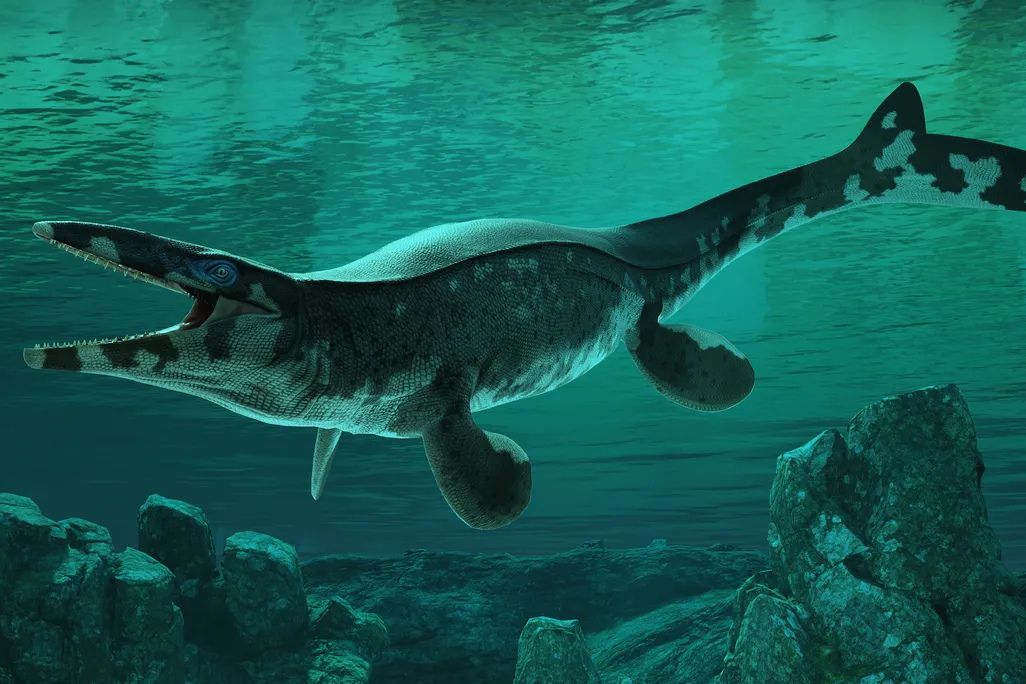
The Tyrannosaurus rex (T. rex) has long been considered the king of the land. Now, scientists have found an equally terrifying ancient sea predator. It ruled the oceans about 13 million years before T. rex roamed Earth. The animal was so powerful that the researchers named it Tylosaurus rex. The word rex means "king." Its full name translates to "king of the knob lizards."
This giant marine reptile could grow up to 43 feet (13 m) long, or about the size of a school bus. It weighed between three and four tons, and its massive skull measured over 5.5 feet (1.7 m) long. The creature had a mouthful of sharp, serrated teeth for tearing into prey. This was different from other known members of its family. They had smooth, cone-shaped teeth better suited for grabbing prey.
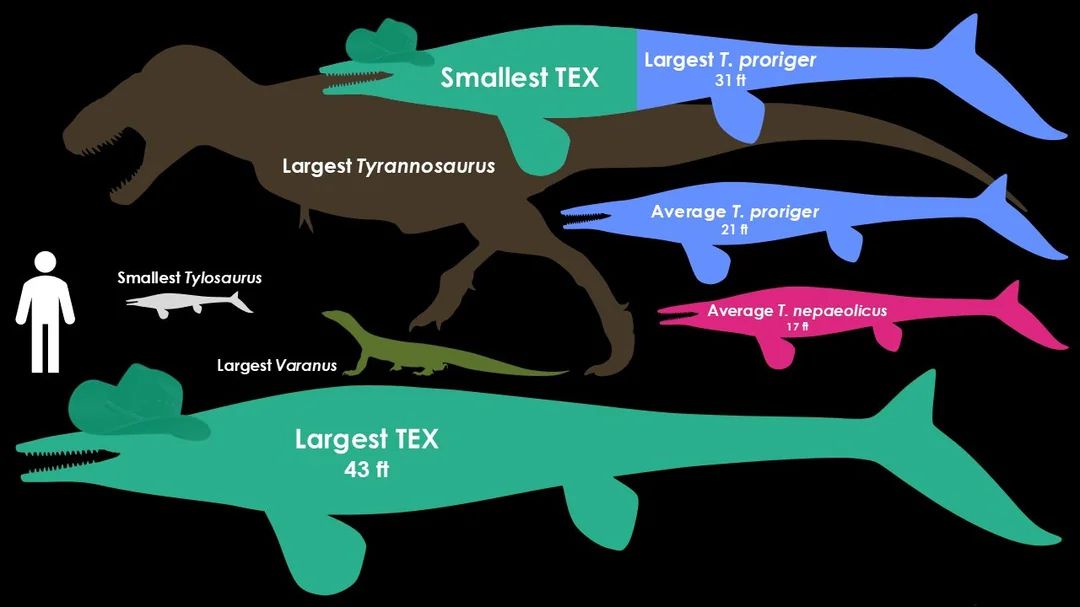
The reptile's fossils had been sitting in plain sight in North American museums for decades. But they were wrongly labeled as Tylosaurus proriger (T. proriger). This marine reptile belonged to the same genus as Tylosaurus rex. However, it was much smaller and lived at a different time.
The path to the discovery of Tylosaurus rex began in 2012 when paleontologist Michael Polcyn noticed unusual features in a large T. proriger fossil from Texas. Years later, paleontologist Amelia Zietlow spotted another fossil that also looked different from other known specimens of the species. This one was housed at the American Museum of Natural History in New York.
To investigate, Zietlow and her team examined dozens of T. proriger fossils across the country. In addition to the differences in appearance, they found another important clue. The true T. proriger fossils were about 84 million years old. They had also been primarily found in Kansas. In contrast, the Tylosaurus rex specimens were 80 million years old and had been discovered mostly in Texas.
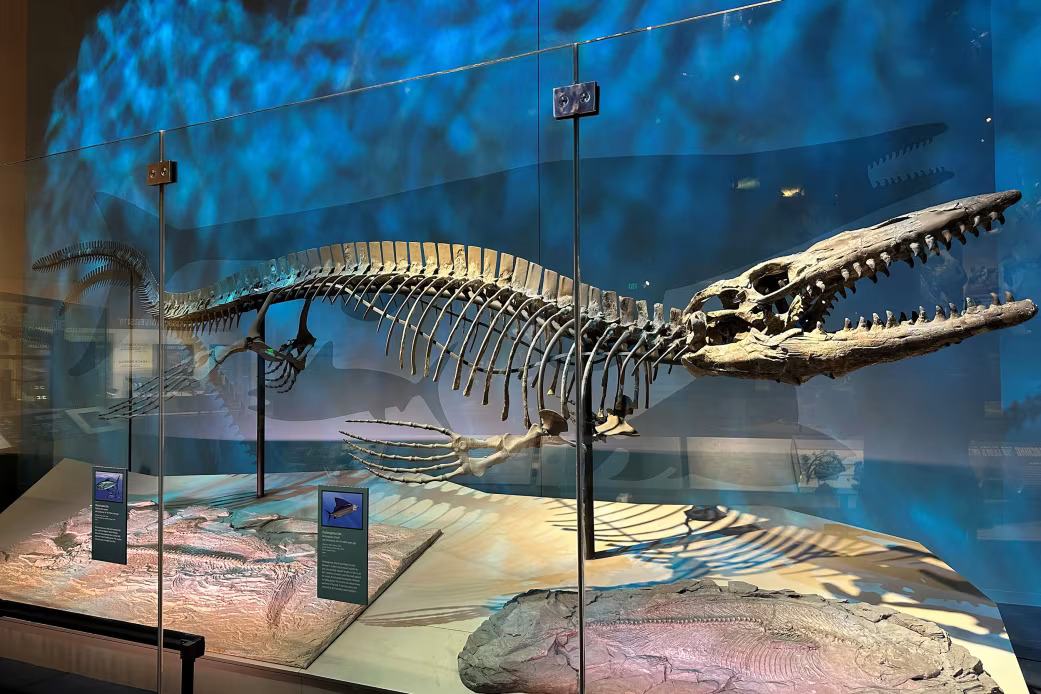
(Credit: Perot Museum of Nature and Science)
Ultimately, the scientists identified twelve Tylosaurus rex specimens. The most distinct is a giant skeleton found near Dallas, Texas, in 1979. Now on display at the Perot Museum of Nature and Science, it is nicknamed "The Black Knight." The animal is missing the tip of its snout and has a broken jaw that healed while it was still alive. This shows that the reptile recovered from its injuries and kept hunting in the ancient seas.
The team published their findings in the Bulletin of the American Museum of Natural History on May 21, 2026. The discovery could reshape scientists' understanding of how these ancient marine reptiles evolved.
Resources: Livescience.com, CNN.com, Sciencedaily.com, amnh.org

Get the Workbook for this article!
Workbook contains: Article, Reading Comprehension, Critical Thinking Questions, Vocabulary in Context (+ answers), Multiple Choice Quiz (+ answers), Parts of Speech Quiz (+ answers), Vocabulary Game (+ answers)Cite Article
Learn Keywords in this Article

40 Comments
- nufifoju-17872387781821 daysI like it
- fopizowykaji24 daysTheir cool
 gojegenegatu27 daysWhoa, I LOVE!! Water dinos!!!
 pofanerotosa3 monthsI wonder what it looks like in real life except I didn't see the video cause I'm not allowed to watch YouTube but it's just way too cool to look at the picture of the video I really wanna go to Dallas Texas to see the PEROT museum of nature and science I think that's what it's called
- mewybybylome3 monthsJames says: "I wonder what would happen if you put a school bus in the sea when the Tylosaurus Rex was alive! That would be an interesting field trip, but you wouldn't have time to tell anyone about it because you would be eaten in 5 seconds! Grandma says: "I live in a small city that has no major museums. I would love to go to a natural science or natural history museum to see these kinds of fossils! So, if you have these types of museums where you live...GO CHECK THEM OUT! They probably have amazing things inside."
 xxpokefanxx3 monthsit's huge. Super cool how we keep finding these things, though. Who knows, maybe some of them are still alive, deep in the trenches. Wouldn't that be something.
 hydavezabawi3 monthsOoooh interesting
 ajuni3 monthsVery interesting
 mudowewelyfe3 monthsIt is so cool!
 ruby5543 monthsThat's so cool