
These Tiny Fish Can Climb Steep Rock Walls
Language
Reading Level
Listen to Article
Alignment
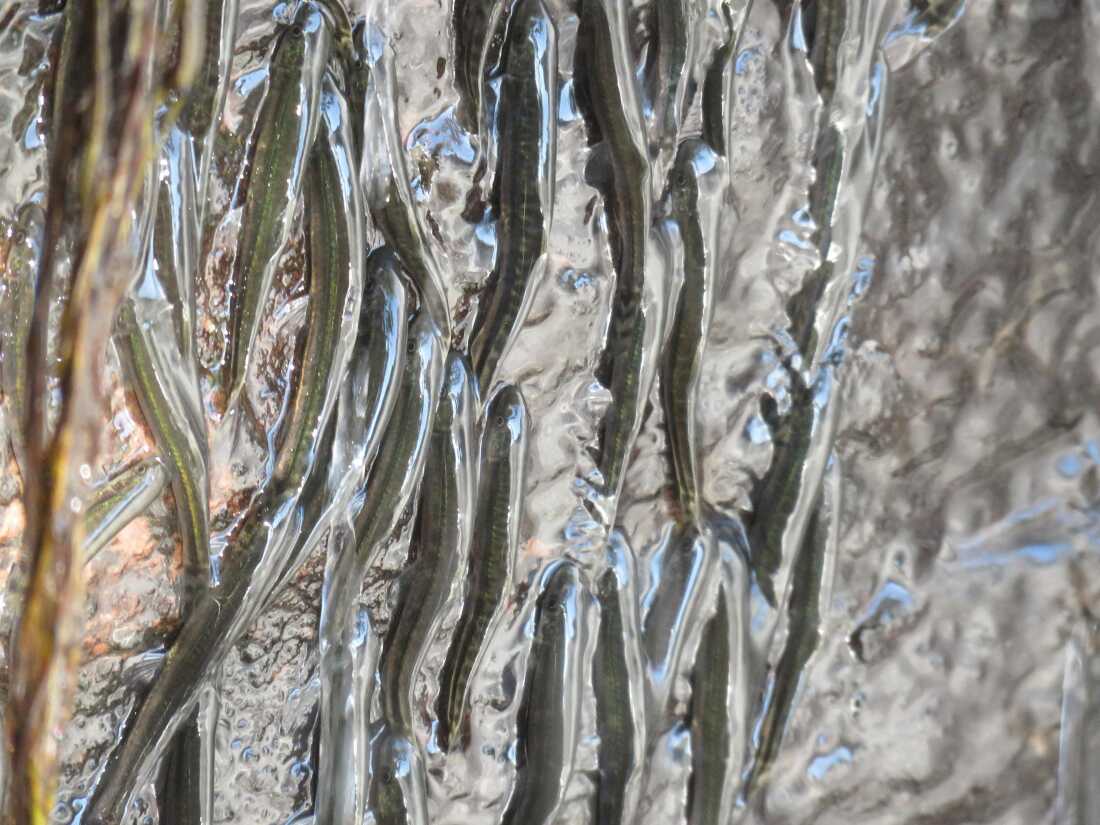
For decades, people in The Democratic Republic of Congo in central Africa have reported seeing tiny shellear fish climb the steep walls of Luvilombo Falls. In 2009, a local scientist even captured the fish on video, but the recordings were later lost. Now, 17 years later, a new study published in Scientific Reports on April 2, 2026, finally provides evidence of the remarkable feat.
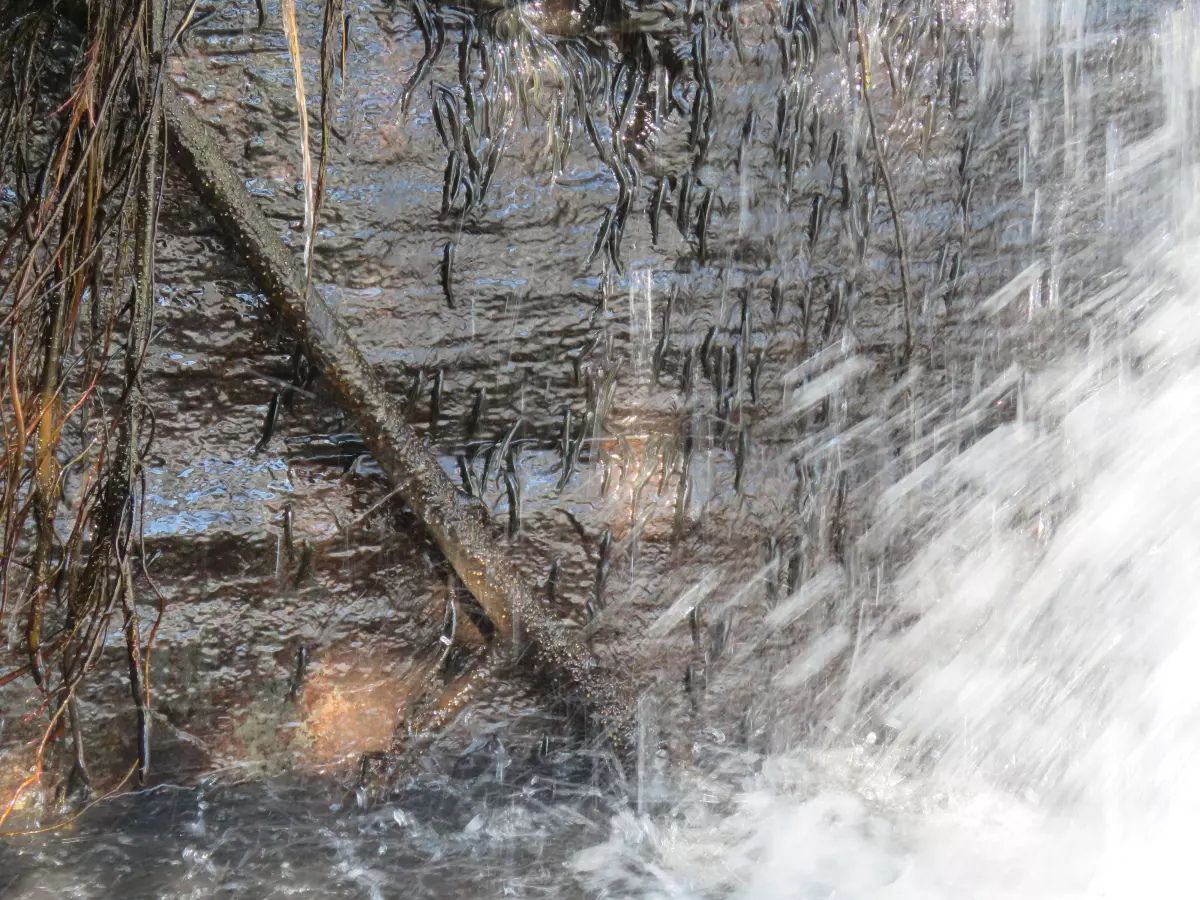
The research was led by P. Kiwele Mutambala, a Ph.D. student at the Université de Lubumbashi. He and his team visited the 50-foot (15-meter) falls at the end of the rainy seasons in the spring of 2018 and 2020. This is when flooding triggers the fish's upstream migration. What they saw was extraordinary. Despite being no larger than a French fry, the fish successfully scaled a vertical rock of the waterfall against the force of rushing water.
"The first time I was very excited," Mutambala recalls. "It's as if the fish is swimming but in vertical. It's beyond imagination."
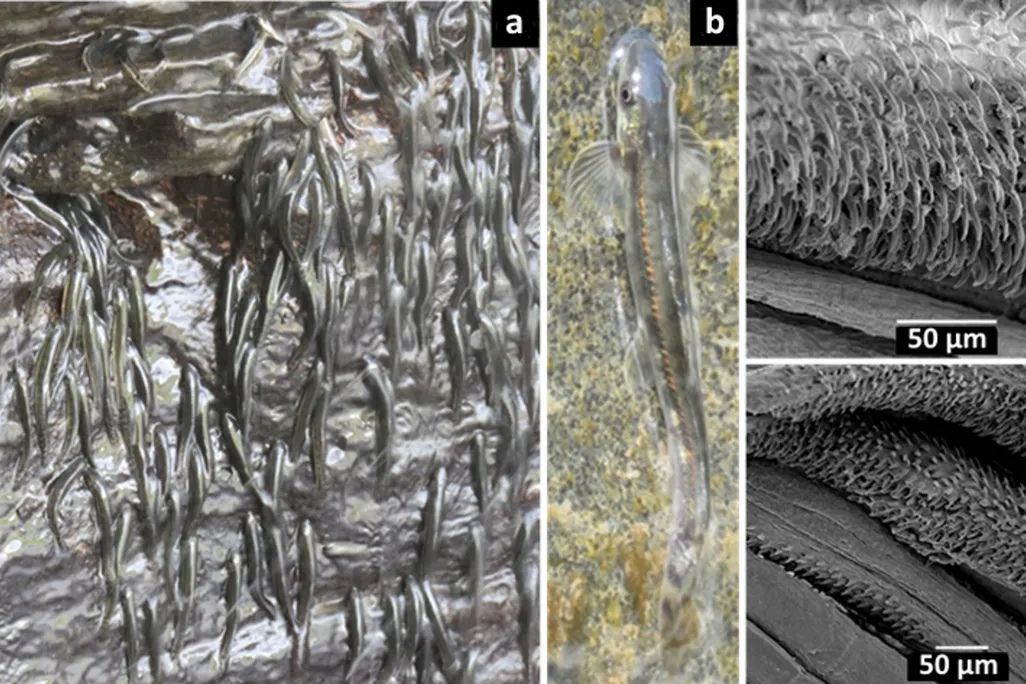
To understand how the fish accomplish this challenge, the researchers examined their structure using CT scans. They found that the front fins are covered with microscopic hooks that grip slippery rock surfaces like Velcro. The back fins provide support and help propel the fish upward.
Even with these adaptations, climbing the wall is a long and exhausting task for the tiny creatures. To avoid the strongest currents in the center of the falls, the fish inch their way up along the edges. They move in short bursts and often stop to rest for up to an hour at a time. Many lose their grip and tumble back down, forcing them to start over. Not surprisingly, a single journey can take as long as 10 hours.
Adult shellears can grow up to four inches (10 cm) long. However, only individuals under two inches (5 cm) were seen attempting the climb. This suggests that the older fish may be too large and heavy to undertake the journey.
Scientists are not sure why these fish try to reach the top of the falls. Some believe they are looking for better food sources or safer habitats with fewer predators. Others think they may be seeking breeding grounds and mates.
Whatever the reason, understanding this behavior is important. Researchers say such discoveries can improve conservation efforts and provide valuable insights into how ecosystems function.
Shellears are the first climbing fish found in Africa. But they are not the only ones with this ability. Several species of stream gobies in Hawaii regularly climb waterfalls to reach their spawning grounds. Instead of hooks, these fish have a suction cup on their stomachs. This allows them to slowly inch their way up steep, wet rocks.
Resources: Smithsonianmag. com, NPR.com, ZMEscience.com

Get the Workbook for this article!
Workbook contains: Article, Reading Comprehension, Critical Thinking Questions, Vocabulary in Context (+ answers), Multiple Choice Quiz (+ answers), Parts of Speech Quiz (+ answers), Vocabulary Game (+ answers)Cite Article
Learn Keywords in this Article

28 Comments
 wolvefan_116217 daysthat's crazy. I know that fish has be in the water but this is a another level!
 anora17 daysthis is so kewl
 wupomadi-17897416032621 daysso they can breath out of water! wow imagine them just crawling on your wall!🐟
- nodetizabono24 daysWOW NICE
 thecoolchampion27 daysthis look weid but cool
 newsmp28 daysThis is so cool! But they do look a bit gross tho...
 sir_waffleabout 1 monthwell it is weird
 smartreaderabout 1 monththe picture looks gross but it was cool facts though
- anora17 daysI know right it is so cool
 dududohafaloabout 1 monthI bet they are better than me climbing rock walls😚💖
 virgil-100about 2 monthsthis is very cool