
Mars Flyby Sends NASA's Psyche Probe Toward A Metal-Rich Asteroid
Language
Reading Level
Listen to Article
Alignment
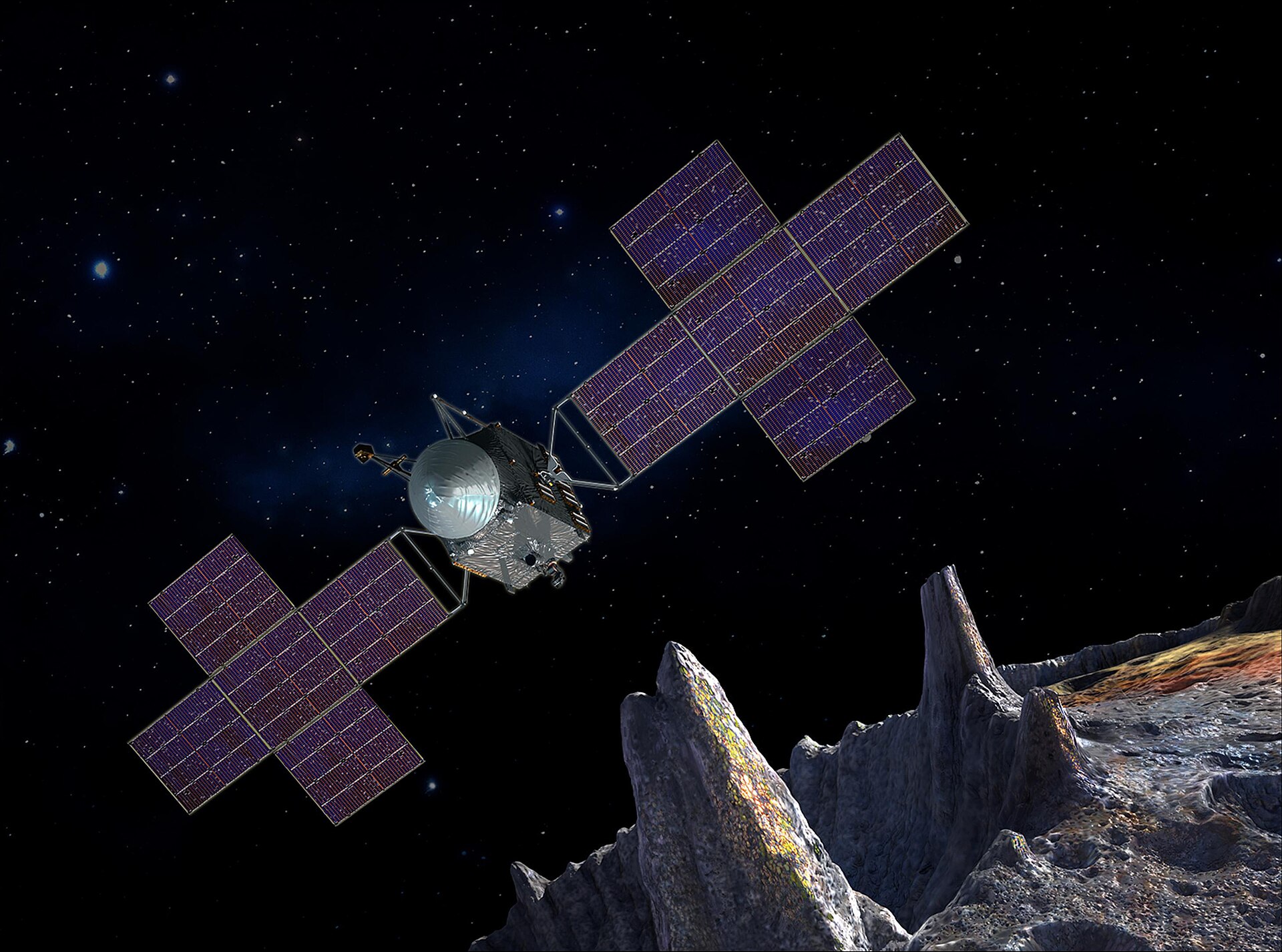
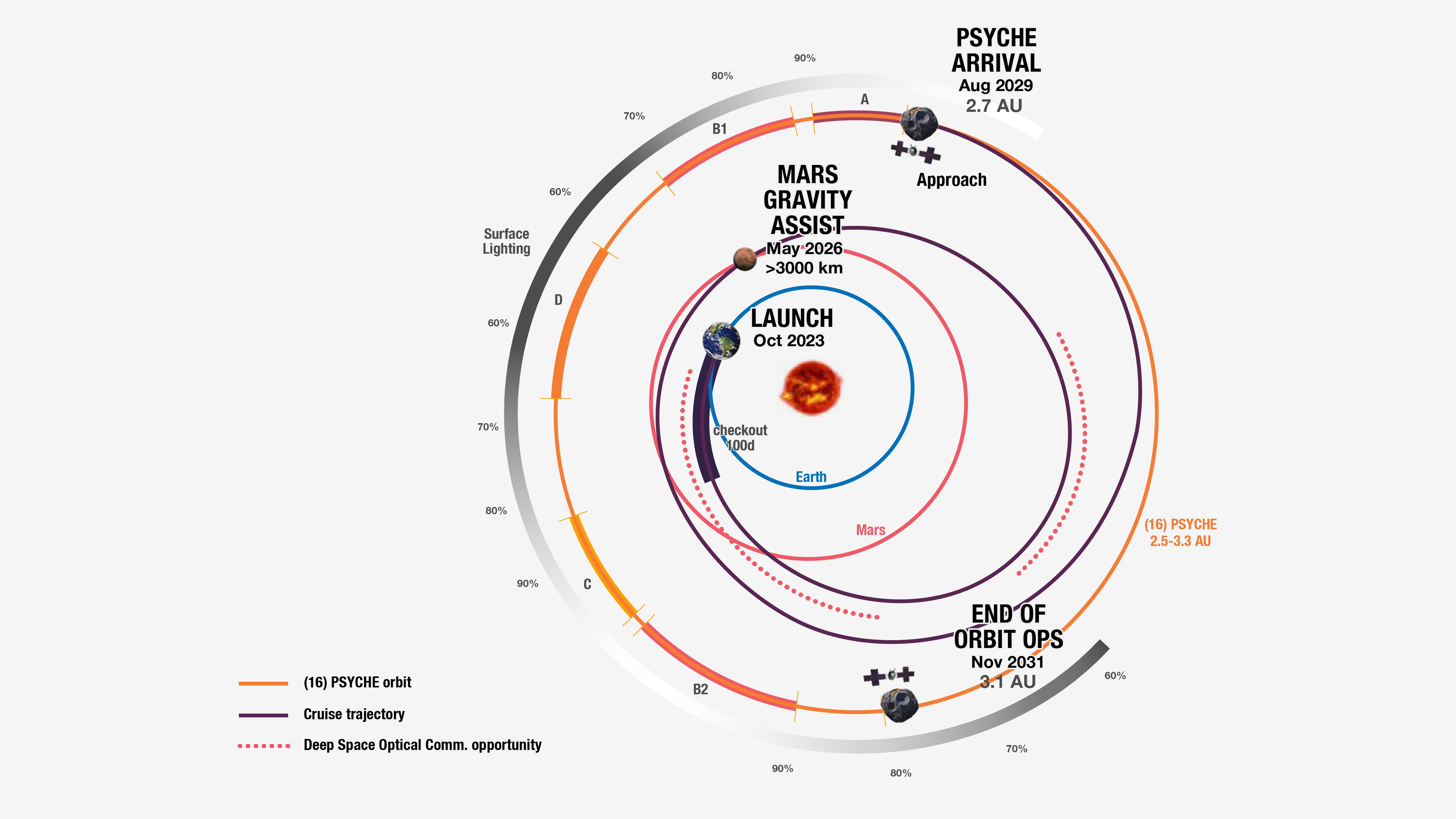
On May 15, 2026 — nearly three years after its launch in October 2023 — NASA's Psyche space probe used Mars' gravity to slingshot itself toward its final destination. Traveling at over 12,300 mph, the spacecraft flew just 2,864 miles above the surface of Mars. The planet's gravity helped it change direction and speed up without using extra fuel. This flyby was a key step in the probe's 2.2-billion-mile (3.5-billion-km) journey to the main asteroid belt between Mars and Jupiter. There, it will study a unique, metal-rich asteroid named 16 Psyche.
To travel this far, the probe relies on special electric engines. While extremely fuel-efficient, they are too weak to push the spacecraft out to the asteroid belt on their own. The boost from Mars gave the probe the extra speed it needed to continue its long journey ahead.
Measuring about 140 miles (225 km) wide, 16 Psyche is one of the largest objects in the main asteroid belt. While most asteroids are made of rock or ice, 16 Psyche is rich in iron and nickel. Scientists believe this massive space rock may be the leftover core of a young planet that was still forming. They think violent crashes with other large space rocks stripped away the planet's outer layers, leaving only the metal inside.
Researchers initially thought the asteroid was almost entirely metal. However, newer studies suggest it is composed of only about 30 to 60 percent metal, with the rest being rock. This may mean that the crashes mixed the planet's rocky outer layers with its metal core.

The Psyche space probe is expected to reach the asteroid in August 2029. It will then enter its orbit and study the surface in detail. The asteroid is of particular interest to researchers because it may offer a rare glimpse inside a planet. While Earth and other rocky worlds also have metal cores, they are buried thousands of miles beneath the surface. This makes it impossible to study them directly. 16 Psyche's exposed core may help reveal the secrets of how rocky planets formed and evolved billions of years ago.
Resources: NASA.gov, Wikipedia.org, Space.com

Get the Workbook for this article!
Workbook contains: Article, Reading Comprehension, Critical Thinking Questions, Vocabulary in Context (+ answers), Multiple Choice Quiz (+ answers), Parts of Speech Quiz (+ answers), Vocabulary Game (+ answers)Cite Article
Learn Keywords in this Article

11 Comments
- alijahgrayson4 dayswow so cool
 isavyninja67about 2 monthsNice words. Super technical
 starrydream3 monthsVery amazing and cool way to travel to its destination. :)
 pofanerotosa3 monthsAwesome but it is so cool sling shot itself back to its new destination.
- pofanerotosa3 monthsAwesome
- mangomango63 monthsIt’s so exciting
- mangomango63 monthsCool
 ilovehenrydsaf13 monthsinsane!
 dustroer3 monthsspace isasome!!!!!!!!!!!!!!!!!!!!
- ianc8993 monthsCool! That is one super probe that found a metal rich meteorite. I am the first to comment!